
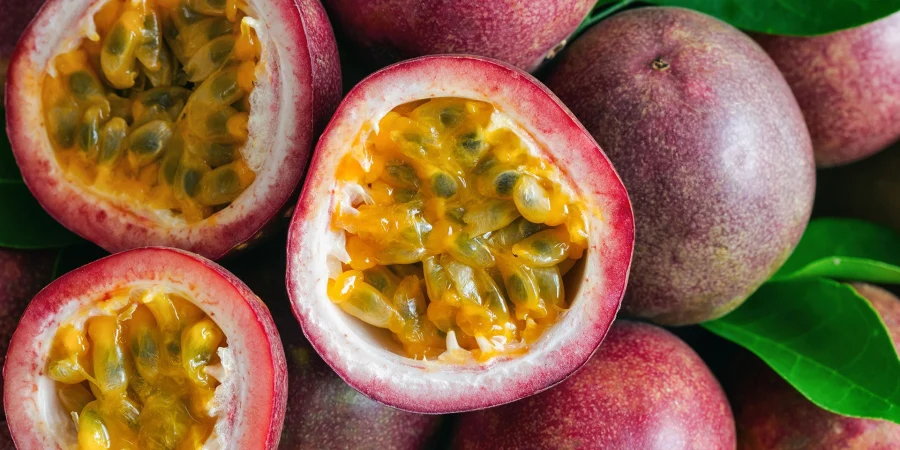
Imagine picking up a small, wrinkled purple orb, slicing it in half, and being hit with an aroma so tropical, so intensely floral and sweet-tart, that it seems impossible it came from something so humble-looking. That’s passion fruit, a fruit that punches well above its weight in flavor, fragrance, and nutritional value.
Despite its exotic reputation, passion fruit is becoming increasingly easy to find in grocery stores around the world, and for good reason. Whether you’re spooning it straight from the shell, blending it into a smoothie, or using it to finish a dessert, passion fruit has a way of making everything taste more alive.
This guide covers everything you need to know about this remarkable fruit – from its origins and flavor profile to its health benefits, culinary uses, and how to buy it.
What Is Passion Fruit?
Passion fruit is a tropical fruit that grows on the Passiflora vine, a fast-growing climbing plant native to South America. The fruit itself is roughly the size of a large egg, round to oval in shape with a thick, waxy outer rind that wrinkles as the fruit ripens. Inside, you’ll find a cavity filled with golden-orange pulp and small, dark, edible seeds.
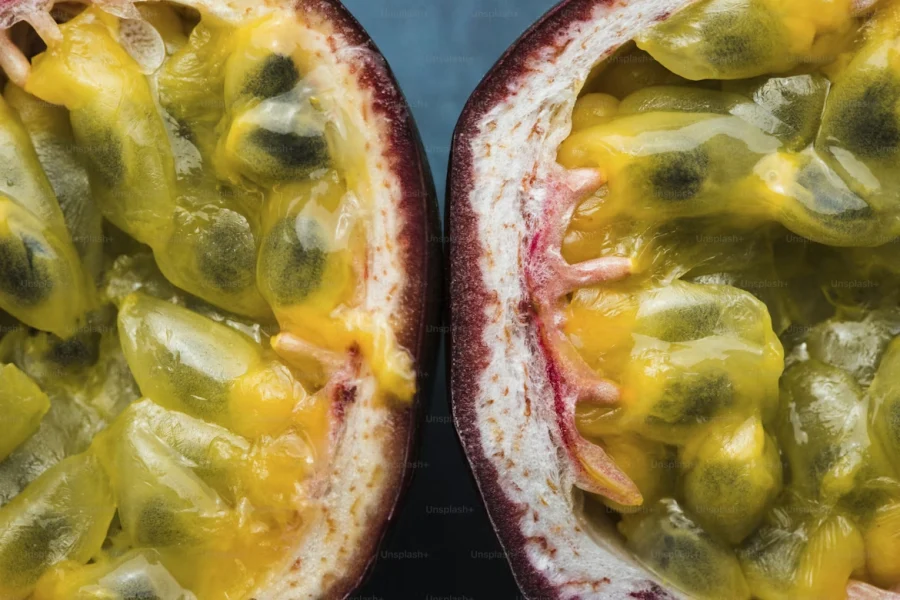
There are two main varieties most commonly found in markets. The purple passion fruit (Passiflora edulis) is the smaller of the two, typically 4–5 cm in diameter, and has a more intense, complex flavor.
The yellow passion fruit (Passiflora edulis f. flavicarpa) is larger, slightly more acidic, and often used commercially for juice production. Both varieties are delicious in their own right.
As for the name, it has nothing to do with romantic passion. Spanish missionaries who arrived in South America in the 16th century named the plant’s distinctive flower the “Flor de la Passion” – the Passion Flower, because they believed its parts symbolized the Passion of Christ.
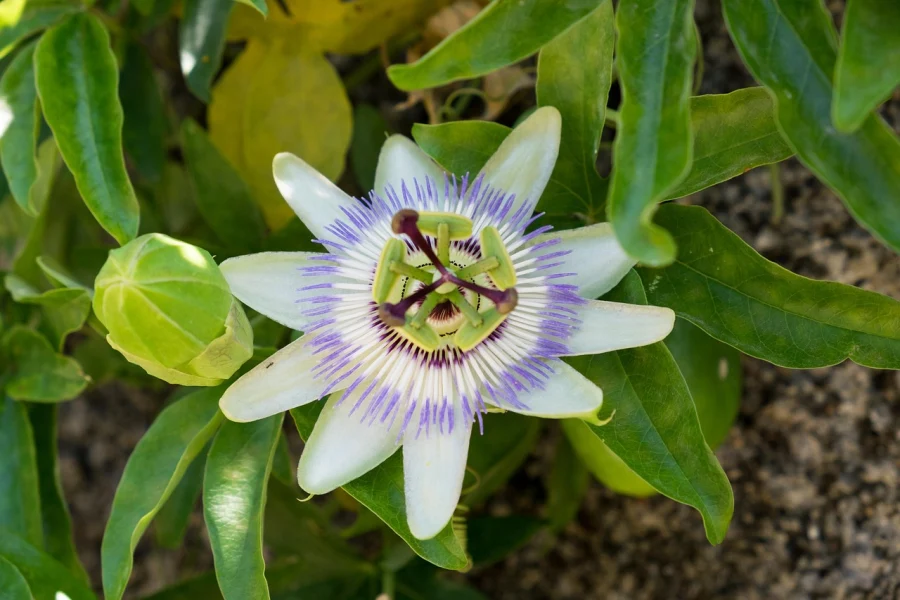
The name stuck, and the fruit that followed was named after the flower. Today, passion fruit is grown across tropical and subtropical regions worldwide, including Brazil, Australia, South Africa, Kenya, and Hawaii.
Flavor & How to Eat It
Passion fruit has one of the most distinctive flavors in the fruit world. It is intensely aromatic, with a flavor that is simultaneously sweet and tart, tropical and floral. Some people detect hints of citrus, guava, and pineapple all at once. The seeds are crunchy and edible, adding a textural contrast to the silky pulp around them.
Picking the right passion fruit is key. Here’s what to look for:
- Color: Look for deep purple or golden yellow skin, depending on the variety.
- Wrinkles: A wrinkled skin is a sign of ripeness, not spoilage. The more wrinkled, the sweeter the fruit.
- Weight: It should feel heavy for its size, indicating a full cavity of pulp.
- Smell: A ripe passion fruit will have a sweet, floral aroma even before you cut it.
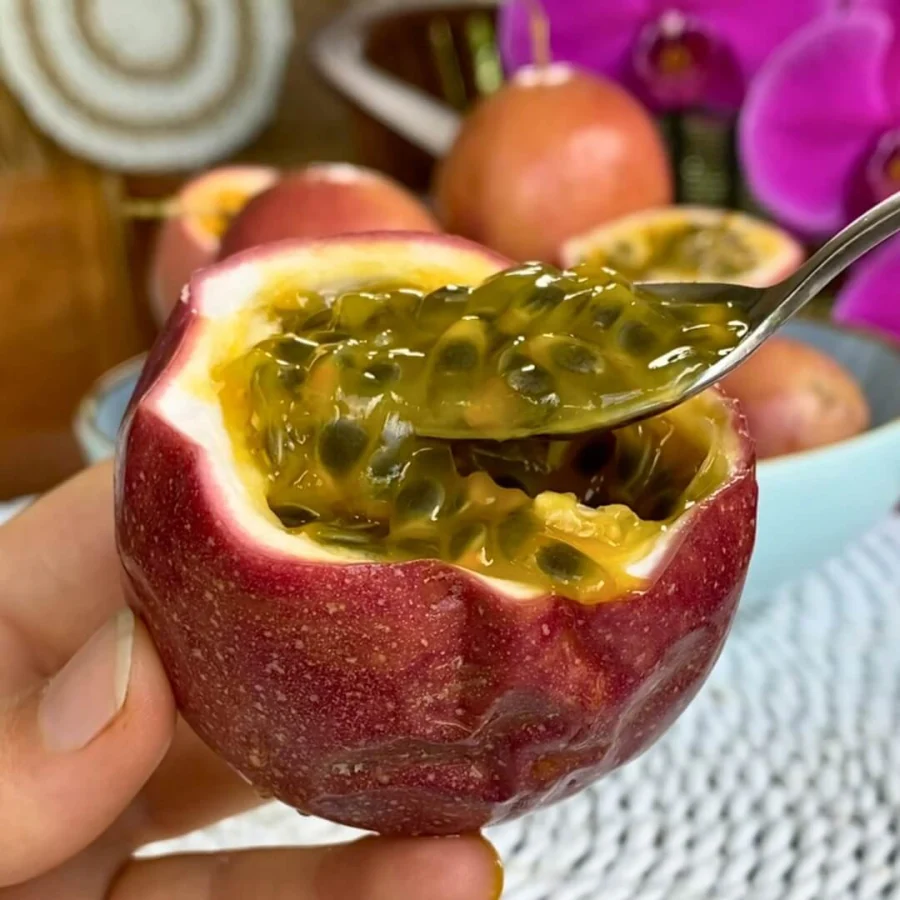
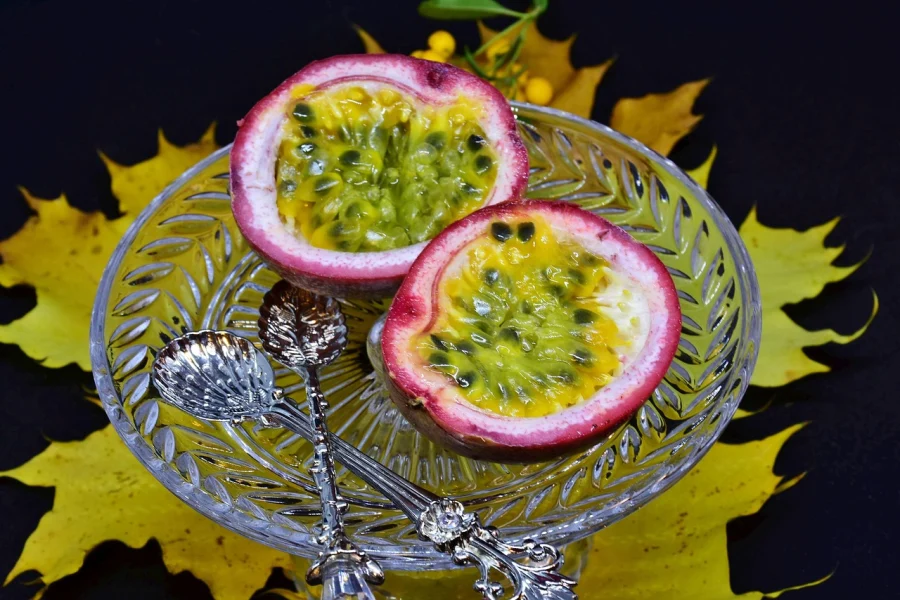
To eat it simply, cut the fruit in half and scoop out the pulp with a spoon, seeds and all. It’s perfectly delicious on its own, spooned over yogurt, stirred into oatmeal, or used as a topping for ice cream.
If you prefer a smoother texture without the seeds, strain the pulp through a fine sieve to collect just the juice.
Nutritional Profile & Health Benefits
Don’t let passion fruit’s small size fool you – it’s nutritionally impressive. A single serving (about two passion fruits, or roughly 35 grams of pulp) delivers a notable punch of vitamins, minerals, and fiber, all for under 40 calories.
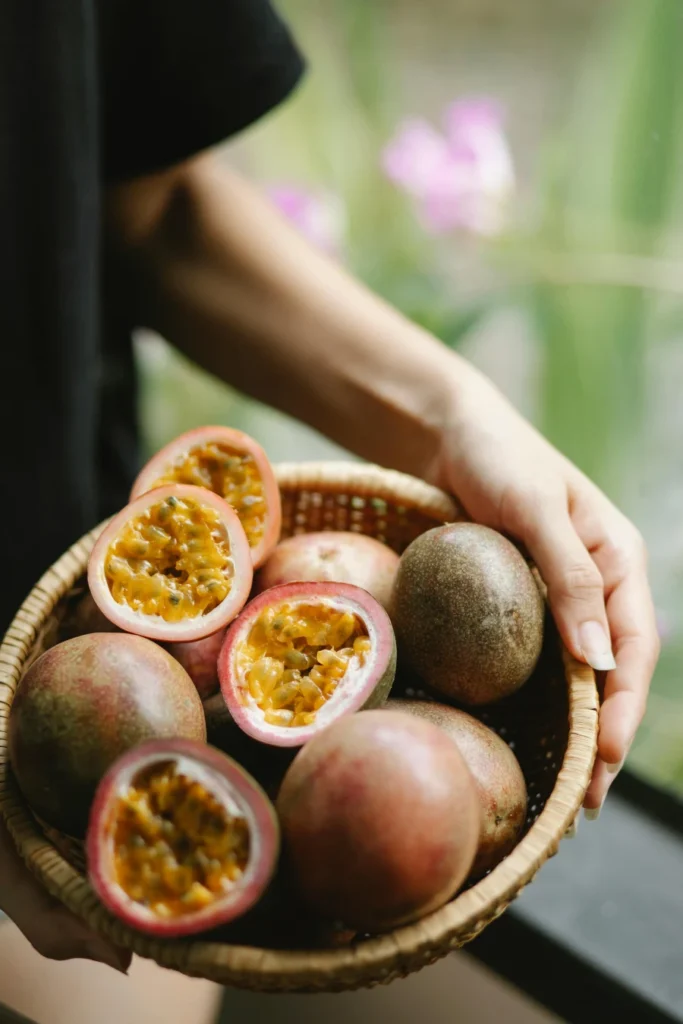
Key nutrients include:
- Vitamin C: Supports immune function and skin health. One serving provides a meaningful portion of your daily recommended intake.
- Dietary Fiber: Passion fruit is an excellent source of fiber, which aids digestion, promotes feelings of fullness, and supports healthy cholesterol levels.
- Vitamin A: Important for eye health, immune function, and skin integrity.
- Antioxidants: Passion fruit is rich in polyphenols and carotenoids, compounds that help neutralize free radicals in the body.
- Potassium: A mineral that plays a key role in heart health and blood pressure regulation.
Research suggests that regular consumption of passion fruit may support heart health, improve digestive regularity, and even help regulate blood sugar levels.
Its high antioxidant content may also contribute to reduced inflammation. That said, passion fruit is a food not a medicine and is best enjoyed as part of a varied, balanced diet.
Culinary Uses
Perhaps the most exciting thing about passion fruit is how versatile it is in the kitchen. Its bold, bright flavor can enhance both sweet and savory dishes, and it works beautifully in everything from cocktails to salad dressings.
Beverages

Passion fruit is a natural in drinks. Its juice is the base for the famous Brazilian “maracujá” juice – a simple blend of passion fruit pulp, water, sugar, and sometimes condensed milk.
It’s equally at home in tropical cocktails like the Pornstar Martini, or blended into smoothies with mango, banana, and coconut milk for a vitamin-packed breakfast.
Desserts
Passion fruit’s tartness makes it a natural match for rich, creamy desserts. It’s commonly used in tarts, cheesecakes, mousses, panna cottas, and pavlovas – where its acidity cuts through sweetness beautifully.
In Australia and New Zealand, a passion fruit-topped pavlova is practically a national institution. It’s also stirred into curds, similar to lemon curd, and used as a filling for chocolates and macarons.
Savory Applications
Passion fruit isn’t just for desserts. The pulp can be reduced into a glaze for grilled chicken, duck, or pork, adding a fruity, tangy complexity. It works wonderfully in vinaigrettes and salad dressings, bringing brightness to greens or roasted vegetables.
In South America and Southeast Asia, passion fruit is also used in fresh salsas and chutneys, often paired with chili for a sweet-heat combination.
Growing Passion Fruit
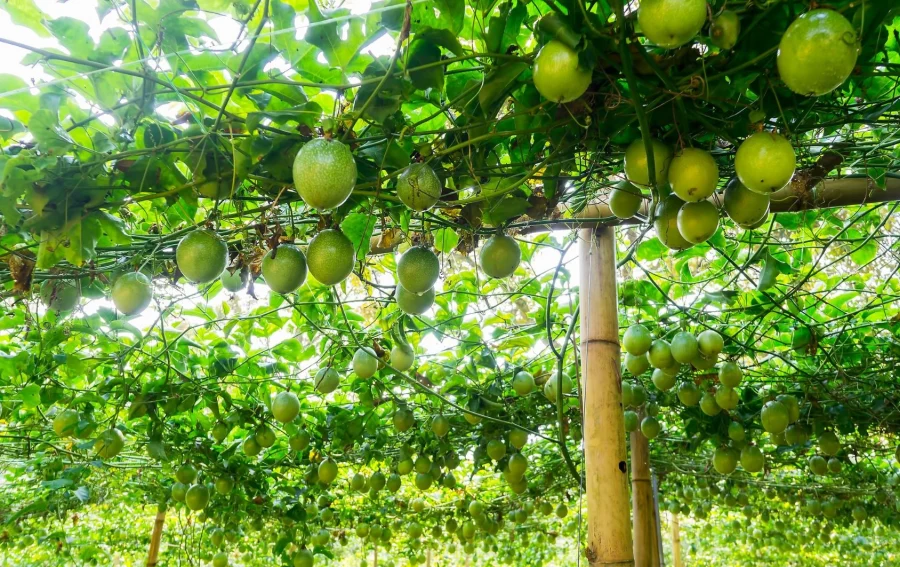
If you live in a warm climate, growing passion fruit at home is a surprisingly rewarding project. The Passiflora vine is a vigorous grower that can reach 15–20 feet in a single growing season, and it produces some of the most spectacular flowers in the plant kingdom – intricate, alien-looking blooms in purple and white that are almost as exciting as the fruit.
Passion fruit thrives in USDA hardiness zones 9–12, meaning it prefers subtropical to tropical climates with mild winters. It needs full sun, well-drained soil, and a sturdy trellis or fence to climb.
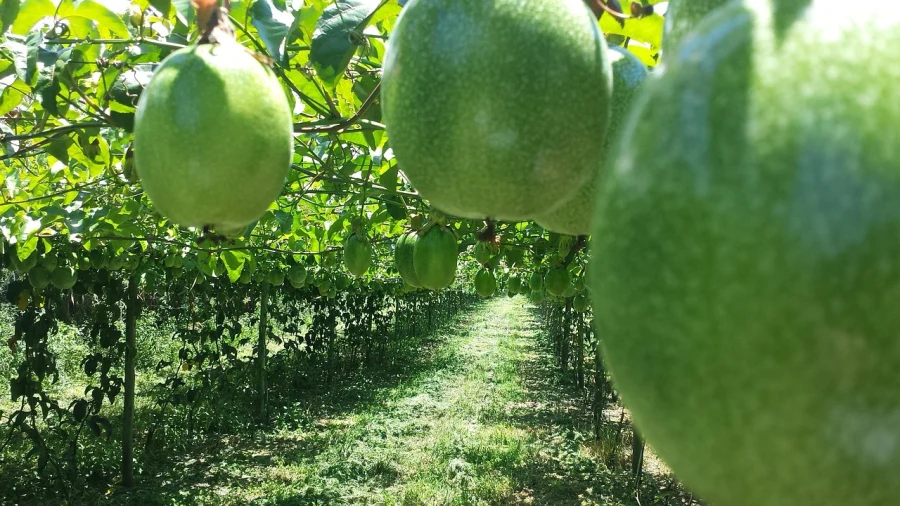
Most plants begin fruiting within 12–18 months of planting, and a healthy vine can produce fruit for many years. In cooler climates, passion fruit can be grown in large containers and brought indoors during winter, though fruit production will be more limited.
Buying, Storing & Availability
Fresh passion fruit can be found in well-stocked grocery stores, specialty food markets, and Latin American or Asian supermarkets. Availability tends to peak in late summer through winter for purple varieties, though yellow varieties are available for much of the year.
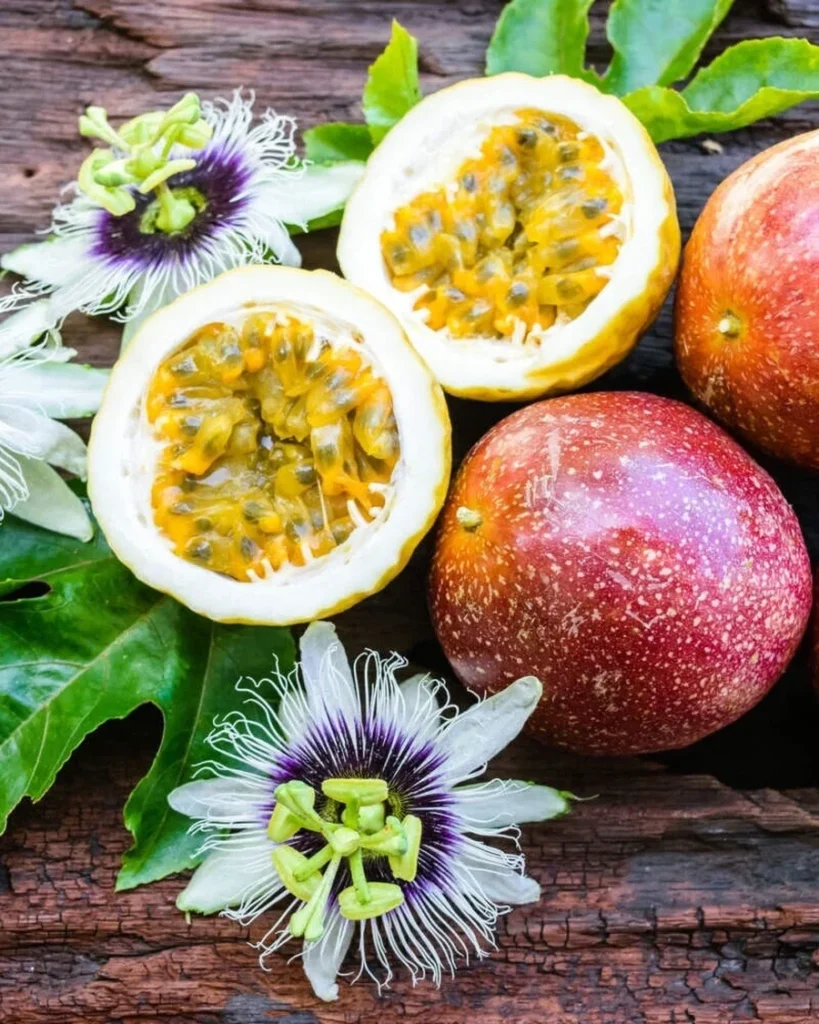
If fresh fruit is hard to find, frozen passion fruit pulp is an excellent alternative – it retains all the flavor and nutrition of fresh fruit.
Storing passion fruit is simple:
- At room temperature: Leave passion fruit on the counter until it wrinkles and is fully ripe. This can take a few days.
- In the refrigerator: Once ripe, passion fruit keeps well in the fridge for up to two weeks.
- Pulp: Scooped pulp can be frozen in ice cube trays for months, making it easy to add to smoothies or recipes at any time.
Conclusion
Passion fruit is one of those rare ingredients that earns its exotic reputation entirely on its own merits. It’s beautiful, intensely flavored, nutritionally rich, and remarkably versatile – equally at home in a morning smoothie, a fine-dining dessert, or a backyard garden. It’s the kind of fruit that makes you feel a little more alive when you eat it.
Next time you spot passion fruit at your local market, whether fresh, frozen, or in juice form – grab it. Slice one open, take a whiff of that impossibly fragrant pulp, and scoop it straight from the shell.
It’s one of the most immediate and uncomplicated pleasures the fruit world has to offer. Once you’ve tasted it, you’ll understand exactly why people around the world are so passionate about it.
Q&A
What is passion fruit good for?
Passion fruit is packed with vitamin C, vitamin A, fiber, and antioxidants – all in a very low-calorie package. It supports immune health, aids digestion, and may help maintain healthy blood pressure and heart function.
Can you eat raw passion fruit?
Absolutely. In fact, eating it raw is the most common way to enjoy it. Just slice it in half and scoop out the pulp and seeds with a spoon. The seeds are fully edible and add a pleasant crunch.
Is passion fruit high in fiber?
Yes – passion fruit is one of the better fruit sources of dietary fiber. Just a small serving provides a solid contribution toward your daily fiber needs, supporting healthy digestion and helping you feel fuller for longer.
What does passion fruit taste like?
Passion fruit is intensely aromatic with a flavor that is both sweet and tart at the same time. Many people pick up notes of citrus, guava, and pineapple. The overall effect is bright, tropical, and deeply fragrant.
Why is passion fruit so expensive?
Passion fruit is expensive because it is hand-harvested, has a short shelf life, and is grown in limited tropical and subtropical regions. The fruit also takes over a year to appear after planting, making large-scale production slow and labor-intensive.